0 million years ago


20 million years ago
Neocene Period. Mammals and birds continue to evolve into modern forms. Early hominids emerge in Africa.


35 million years ago
Mid Tertiary. Mammals have evolved from small, simple forms to a diverse group. Primates, cetaceans, and other groups evolve. The Earth cools and deciduous plants become more common. The first grass species evolve.


50 million years ago
Early Tertiary. Following the asteroid impact that killed the dinosaurs, surviving birds, mammals, and reptiles diversified. Early whales evolved from land mammals.


65 million years ago
Late Cretaceous. A mass extinction occurs, leading to the extinction of dinosaurs, many marine reptiles, all flying reptiles, and many marine invertebrates and other species. Scientists believe the exintction was caused by an asteroid impact on the present-day Yucatan Peninsula in Mexico.


90 million years ago
Cretaceous Period. Ceratopsian and pachycephalosaurid dinosaurs evolve. Modern mammal, bird, and insect groups emerge.


105 million years ago
Cretaceous Period. Ceratopsian and pachycephalosaurid dinosaurs evolve. Modern mammal, bird, and insect groups emerge.


120 million years ago
Early Cretaceous. The world is warm and has no polar ice caps. Large reptiles dominate and mammals remained small. Flowering plants evolve and spread throughout the world.


150 million years ago
Late Jurassic. The earliest lizards have appeared and primitive placental mammals have evolved. Dinosaurs dominate both landmasses. Large marine reptiles inhabited the ocean, and pterosaurs were the dominant flying vertebrates.


170 million years ago
Jurassic Period. Dinosaurs thrived as the first mammals and birds evolved. Ocean life diversified and the Earth was very warm.


200 million years ago
Late Triassic. An extinction event is about to happen, resulting in the disappearance of 76% of all terrestrial and marine life species and greatly reducing surviving populations. Some families, such as pterosaurs, crocodiles, mammals, and fish were minimally affected. The first true dinosaurs emerge.


220 million years ago
Middle Triassic. The Earth is recovering from the Permian-Triassic extinction. Small dinosaurs begin to appear. Therapsids and archosaurs emerge, along with the first flying invertebrates.

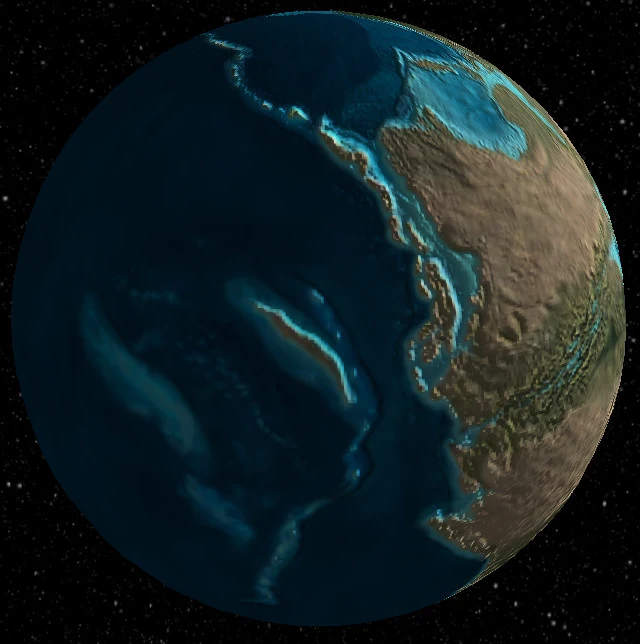
240 million years ago
Early Triassic. Oxygen levels are significantly lower due to the extinction of many land plants. Many corals went extinct, with reefs taking millions of years to re-form. Small ancestors to birds, mammals, and dinosaurs survive.


260 million years ago
Late Permian. The greatest mass extinction in history is about to take place, driving 90% of species extinct. The extinction of plants reduced food supply for large herbivorous reptiles, and removed habitat for insects.

280 million years ago
Permian Period. Landmasses merged and formed the supercontinent Pangea. Extreme conditions such as polar ice caps and deserts limited the extent of plant life, but amphibious tetrapods and reptiles diversified where plants grew. Oceans teemed with fish and invertebrate life.


300 million years ago
Late Carboniferous. Plants developed root systems that allowed them to grow larger and move inland. Environments evolved below tree canopies. Atmospheric oxygen increased as plants spread on land. Early reptiles have evolved, and giant insects diversify.


340 million years ago
Carboniferous Period. A mass extinction harmed marine life, but land organisms adapted. Plants are developing root systems that allowed them to grow larger and move inland. Environments are evolving below tree canopies. Atmospheric oxygen increases as plants spread on land. Early reptiles are evolving.


370 million years ago
Late Devonian. Life on land becomes more complex as plants develop. Insects diversify and fish develop sturdy fins, which eventually evolve into limbs. The first vertebrates walk on land. Oceans and coral reefs host a diverse range of fish, sharks, sea scorpions, and cephalopods. A mass extinction is about to take place that will stress marine life.


400 million years ago
Devonian Period. Life on land becomes more complex as plants develop. Insects diversify and fish develop sturdy fins, which eventually evolve into limbs. The first vertebrates walk on land. Oceans and coral reefs host a diverse range of fish, sharks, sea scorpions, and cephalopods.


430 million years ago
Silurian Period. A mass extinction took place, wiping out nearly half of marine invertebrate species. The first land plants emerge, starting at the edge of the ocean. Plants evolve vascularity, the ability to transport water and nutrients through their tissues. Ocean life becomes larger and more complex, and some creatures venture out of reefs and onto land.


450 million years ago
Late Ordovician. The seas are diverse and the first coral reefs have emerged. Algae is the only multicellular plant, and there is still no complex life on land. Jawless fishes, the first vertebrates, appear. A mass extinction is about to take place.


470 million years ago
Ordovician Period. The seas are diverse and the first coral reefs emerge. Algae is the only multicellular plant, and there is still no complex life on land. Jawless fishes, the first vertebrates, appear.


500 million years ago
Late Cambrian. The ocean is teeming with life following a dramatic expansion of animal diversity in the sea, known as the "Cabrian explosion." The forms of some animals show ancestry to modern animals.


540 million years ago
Early Cambrian. A mass extinction has just taken place. Afterwards, the fossil record shows a dramatic expansion of animal life in the sea, known as the "Cabrian explosion." Animals are beginning to evolve shells and exoskeletons.


560 million years ago
Late Ediacaran. Life is evolving in the sea, and multicellular life is just beginning to emerge. A mass extinction is about to take place.


600 million years ago
Ediacaran Period. Life is evolving in the sea, and multicellular life is just beginning to emerge.


Via dinosaurpictures.org
20 million years ago
Neocene Period. Mammals and birds continue to evolve into modern forms. Early hominids emerge in Africa.
35 million years ago
Mid Tertiary. Mammals have evolved from small, simple forms to a diverse group. Primates, cetaceans, and other groups evolve. The Earth cools and deciduous plants become more common. The first grass species evolve.
50 million years ago
Early Tertiary. Following the asteroid impact that killed the dinosaurs, surviving birds, mammals, and reptiles diversified. Early whales evolved from land mammals.
65 million years ago
Late Cretaceous. A mass extinction occurs, leading to the extinction of dinosaurs, many marine reptiles, all flying reptiles, and many marine invertebrates and other species. Scientists believe the exintction was caused by an asteroid impact on the present-day Yucatan Peninsula in Mexico.
90 million years ago
Cretaceous Period. Ceratopsian and pachycephalosaurid dinosaurs evolve. Modern mammal, bird, and insect groups emerge.
105 million years ago
Cretaceous Period. Ceratopsian and pachycephalosaurid dinosaurs evolve. Modern mammal, bird, and insect groups emerge.
120 million years ago
Early Cretaceous. The world is warm and has no polar ice caps. Large reptiles dominate and mammals remained small. Flowering plants evolve and spread throughout the world.
150 million years ago
Late Jurassic. The earliest lizards have appeared and primitive placental mammals have evolved. Dinosaurs dominate both landmasses. Large marine reptiles inhabited the ocean, and pterosaurs were the dominant flying vertebrates.
170 million years ago
Jurassic Period. Dinosaurs thrived as the first mammals and birds evolved. Ocean life diversified and the Earth was very warm.
200 million years ago
Late Triassic. An extinction event is about to happen, resulting in the disappearance of 76% of all terrestrial and marine life species and greatly reducing surviving populations. Some families, such as pterosaurs, crocodiles, mammals, and fish were minimally affected. The first true dinosaurs emerge.
220 million years ago
Middle Triassic. The Earth is recovering from the Permian-Triassic extinction. Small dinosaurs begin to appear. Therapsids and archosaurs emerge, along with the first flying invertebrates.
240 million years ago
Early Triassic. Oxygen levels are significantly lower due to the extinction of many land plants. Many corals went extinct, with reefs taking millions of years to re-form. Small ancestors to birds, mammals, and dinosaurs survive.
260 million years ago
Late Permian. The greatest mass extinction in history is about to take place, driving 90% of species extinct. The extinction of plants reduced food supply for large herbivorous reptiles, and removed habitat for insects.
280 million years ago
Permian Period. Landmasses merged and formed the supercontinent Pangea. Extreme conditions such as polar ice caps and deserts limited the extent of plant life, but amphibious tetrapods and reptiles diversified where plants grew. Oceans teemed with fish and invertebrate life.
300 million years ago
Late Carboniferous. Plants developed root systems that allowed them to grow larger and move inland. Environments evolved below tree canopies. Atmospheric oxygen increased as plants spread on land. Early reptiles have evolved, and giant insects diversify.
340 million years ago
Carboniferous Period. A mass extinction harmed marine life, but land organisms adapted. Plants are developing root systems that allowed them to grow larger and move inland. Environments are evolving below tree canopies. Atmospheric oxygen increases as plants spread on land. Early reptiles are evolving.
370 million years ago
Late Devonian. Life on land becomes more complex as plants develop. Insects diversify and fish develop sturdy fins, which eventually evolve into limbs. The first vertebrates walk on land. Oceans and coral reefs host a diverse range of fish, sharks, sea scorpions, and cephalopods. A mass extinction is about to take place that will stress marine life.
400 million years ago
Devonian Period. Life on land becomes more complex as plants develop. Insects diversify and fish develop sturdy fins, which eventually evolve into limbs. The first vertebrates walk on land. Oceans and coral reefs host a diverse range of fish, sharks, sea scorpions, and cephalopods.
430 million years ago
Silurian Period. A mass extinction took place, wiping out nearly half of marine invertebrate species. The first land plants emerge, starting at the edge of the ocean. Plants evolve vascularity, the ability to transport water and nutrients through their tissues. Ocean life becomes larger and more complex, and some creatures venture out of reefs and onto land.
450 million years ago
Late Ordovician. The seas are diverse and the first coral reefs have emerged. Algae is the only multicellular plant, and there is still no complex life on land. Jawless fishes, the first vertebrates, appear. A mass extinction is about to take place.
470 million years ago
Ordovician Period. The seas are diverse and the first coral reefs emerge. Algae is the only multicellular plant, and there is still no complex life on land. Jawless fishes, the first vertebrates, appear.
500 million years ago
Late Cambrian. The ocean is teeming with life following a dramatic expansion of animal diversity in the sea, known as the "Cabrian explosion." The forms of some animals show ancestry to modern animals.
540 million years ago
Early Cambrian. A mass extinction has just taken place. Afterwards, the fossil record shows a dramatic expansion of animal life in the sea, known as the "Cabrian explosion." Animals are beginning to evolve shells and exoskeletons.
560 million years ago
Late Ediacaran. Life is evolving in the sea, and multicellular life is just beginning to emerge. A mass extinction is about to take place.
600 million years ago
Ediacaran Period. Life is evolving in the sea, and multicellular life is just beginning to emerge.
Via dinosaurpictures.org
This post may contain affiliate links. As an Amazon Associate, I earn from qualifying purchases.
Comments
Post a Comment